Why Codominant Pines Are Riskier Than They Look
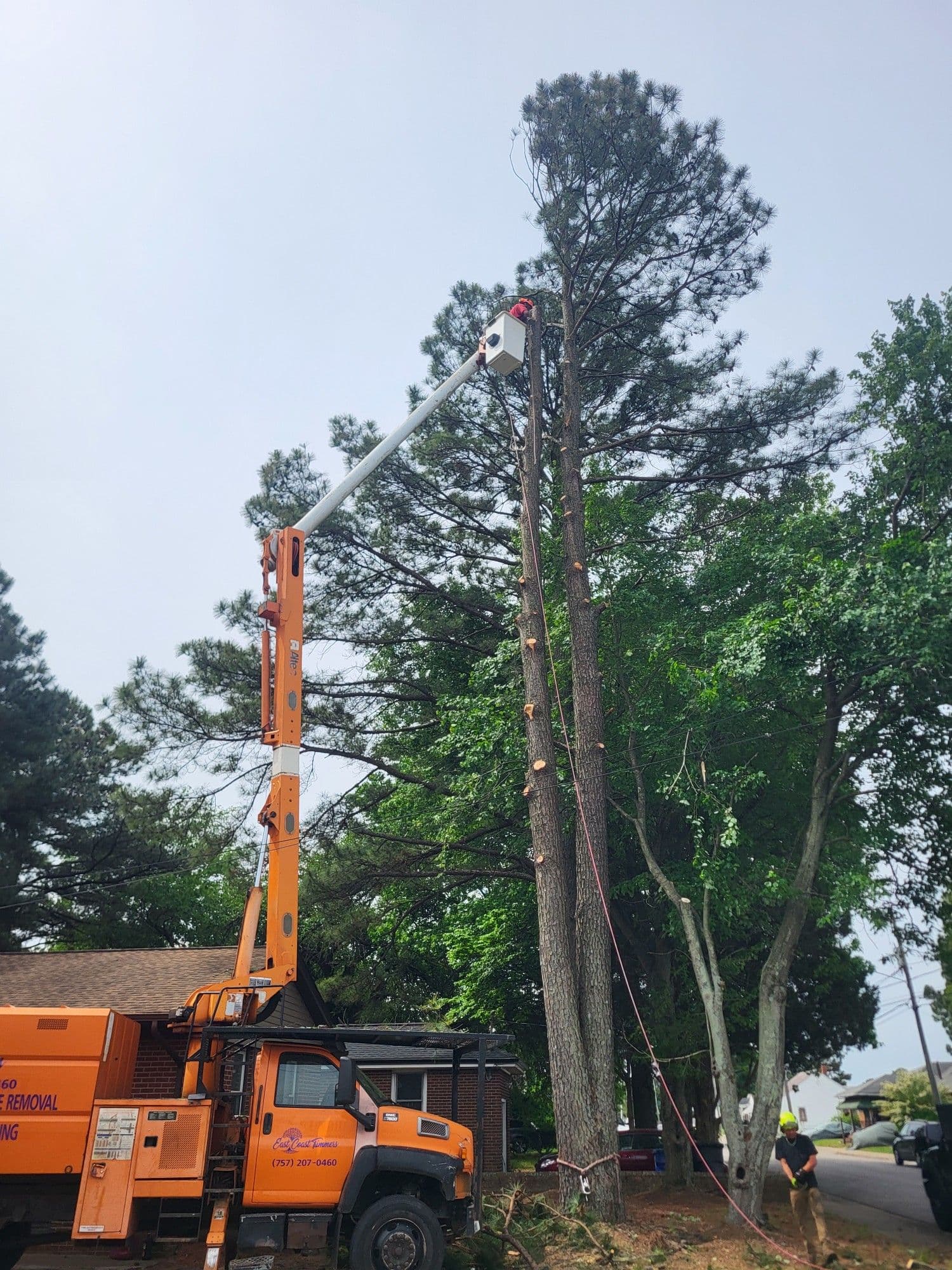
Codominant trees - ones with two or more main trunks growing from the same point - are one of the more deceptive hazards a property can have. From the ground, they often look full, healthy, and totally fine. The problem is what's happening structurally. That split in the trunk creates a weak attachment point, and over time, the weight of each stem pulling in opposite directions puts serious stress on the union. It's not a matter of if it fails - it's when.
With pines specifically, that risk gets amplified. Pine trees hold a lot of canopy mass, and when a codominant stem lets go, it doesn't just drop a branch. You're looking at a significant portion of the tree coming down with serious force. Near a house, a fence, a car, or a utility line, that's a situation nobody wants to deal with after the fact.
This is exactly the kind of job where having the right equipment matters. We ran the bucket truck up to get eyes on the upper structure and work through the canopy methodically, while the ground crew managed the rigging lines to control every piece as it came down. Nothing gets dropped. Nothing gets left to chance. That's how you protect the property around a tree like this.
If you've got a pine - or really any tree - with multiple trunks and you're second-guessing it, that instinct is worth listening to. We're always happy to come out, take a look, and give you a straight answer on what you're actually dealing with.